Walkr
Workshop Facilitation / Interaction Design / UI Design
Project
Details
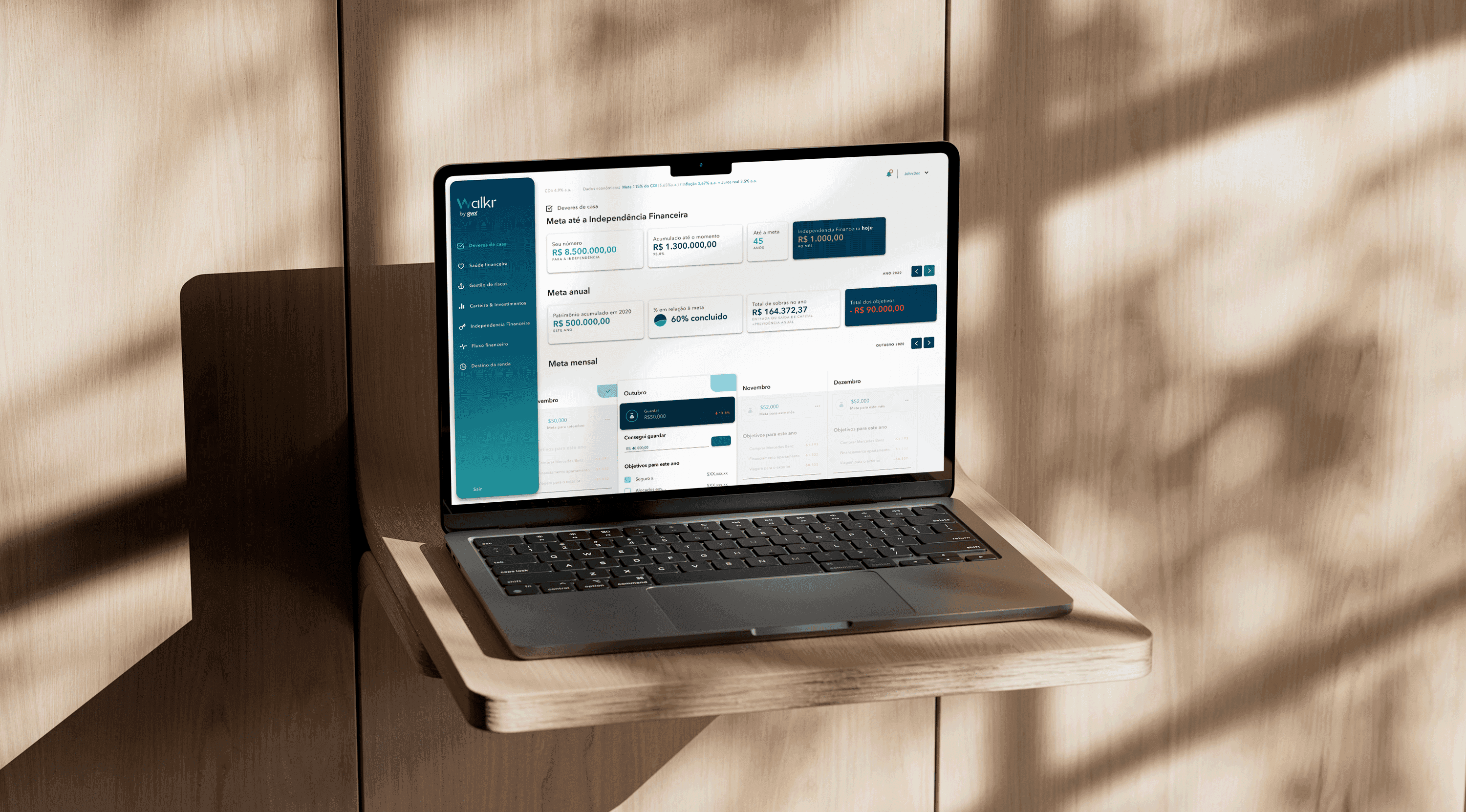
Read about how my team and I moved Walkr beyond spreadsheets, streamlining internal operations, enhancing the client experience, and ultimately redefining the paradigm of accessible financial planning. Join me as I dissect the strategies, successes, and lessons learned from this transformative journey, a testament to the power of innovation in making financial literacy a cornerstone of individual empowerment.
WalkrApp, a leading Brazilian financial planning company, faced two critical challenges: confusing client experiences and operational inefficiencies due to their complex spreadsheet-based system. Clients struggled to navigate their plans, hindering both goal achievement and brand trust. Specialists were bogged down with manual tasks, limiting their ability to provide personalized guidance.
Goals
My team team and I undertook a human-centred approach to develop and launch a user-friendly and interactive Minimum Viable Product (MVP) aimed at:
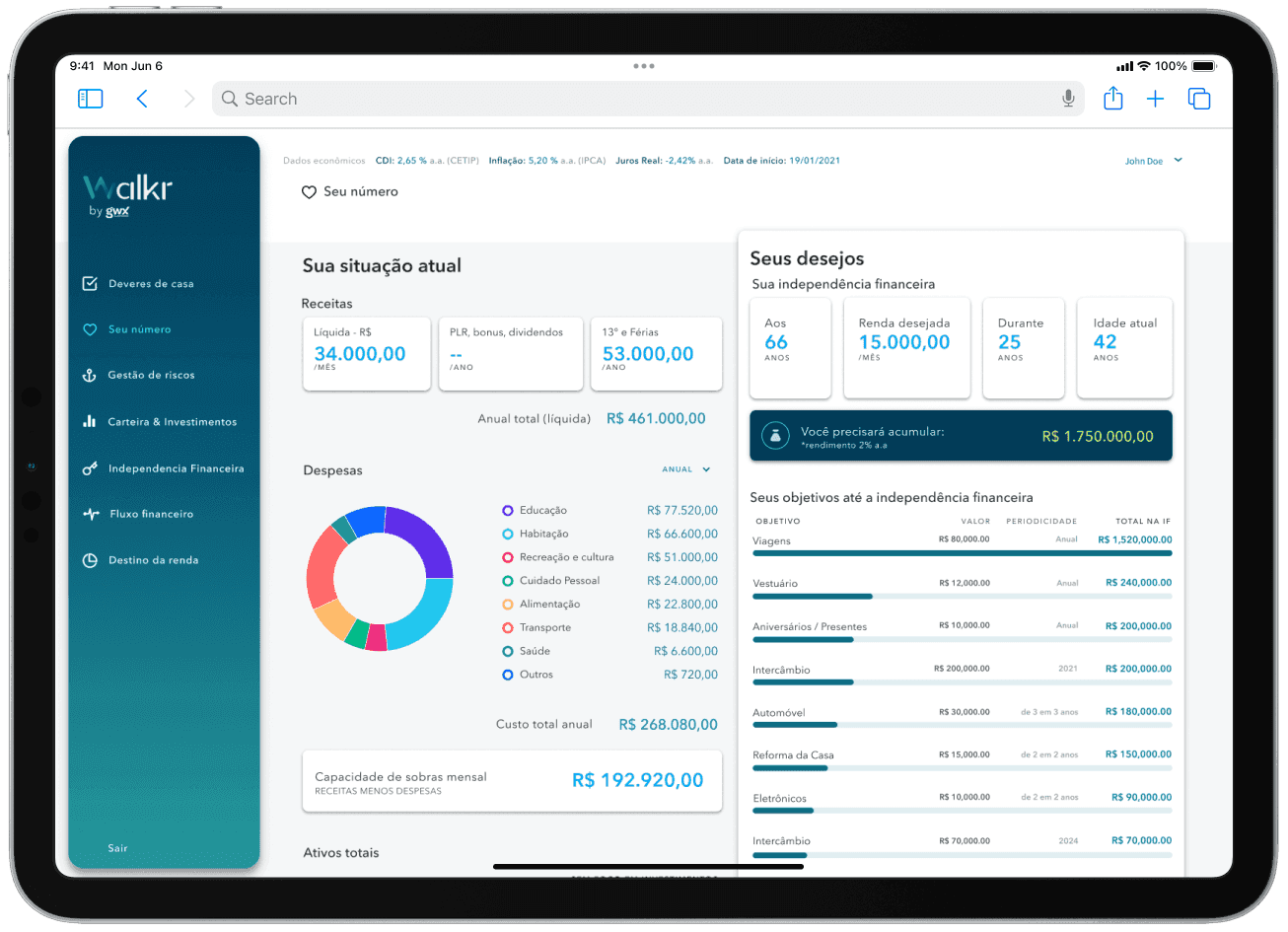
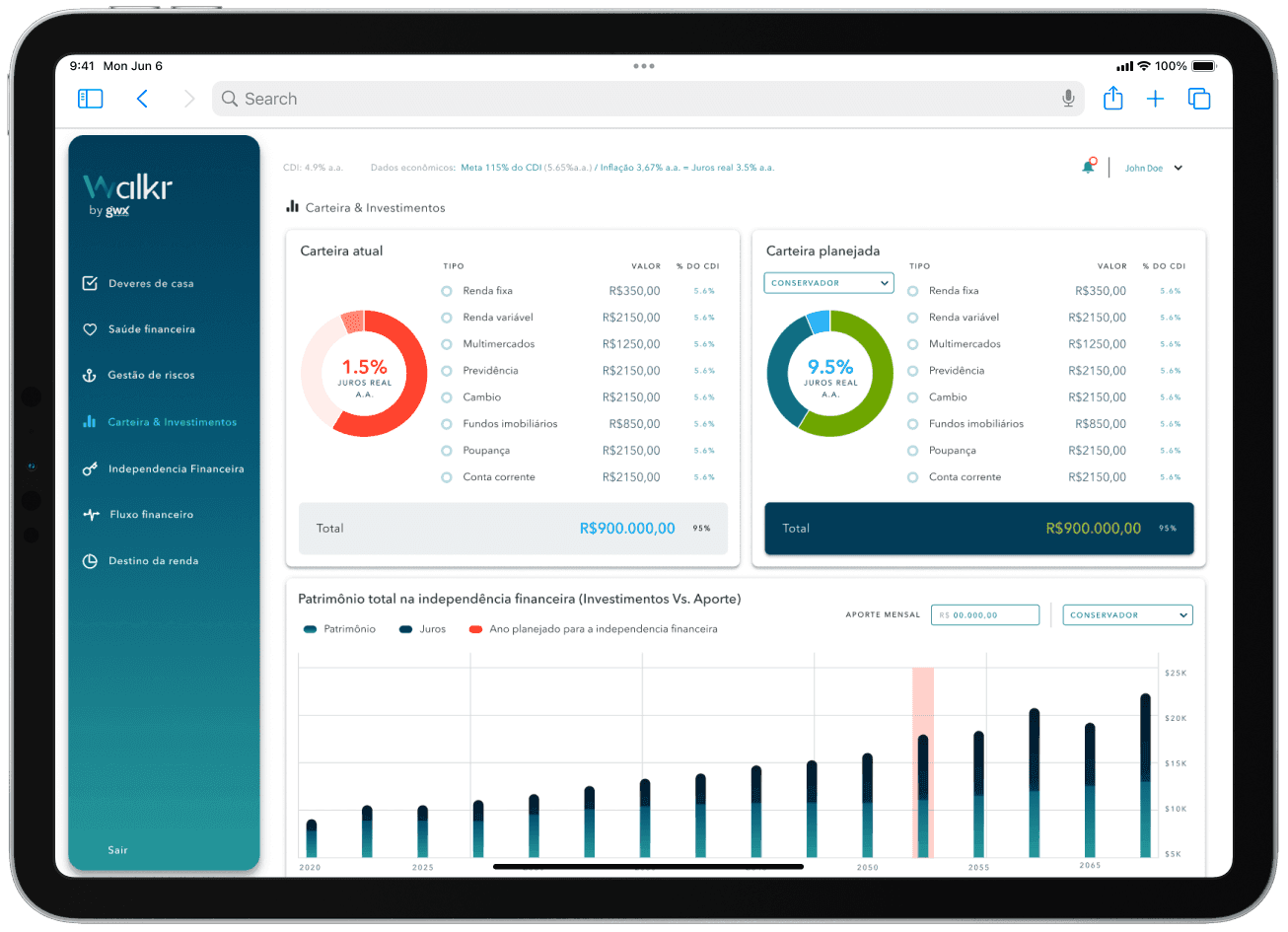
- Client Empowerment: Simplifying financial data visualization through intuitive dashboards, visualizing goals, tracking progress, and confidently celebrating milestones with engaging features.
- Specialist workflow optimization: Streamlining the experience of data collection and input, leveraging time-effort in client consultations and enabling efficient tailoring of financial strategies.
- Knowledge Continuity: Fostering a collaborative knowledge-sharing environment to safeguard expertise against talent turnover.
Results
The MVP wasn't just user-friendly, it tackled inefficiency. Manual updates? Slashed by 40%, freeing specialists for deeper client bonds. New recruits? Onboarded in 1 weeks, not 2, thanks to the platform's usability. Confused calls? Down 30%, as dashboards made financial plans crystal clear. This is just the first chapter in WalkrApp's magical journey, weaving a future where financial freedom is accessible to all.
how we get there
As a solo UX designer, I embraced an unorthodox human-centered approach to tackle this challenge. To get myself up to speed on the business model and the intricacies of the financial world, I kicked things off with a 3-day design sprint. This intensive journey involved gathering insights from WalkrApp's seasoned specialists and even the company's founder himself.
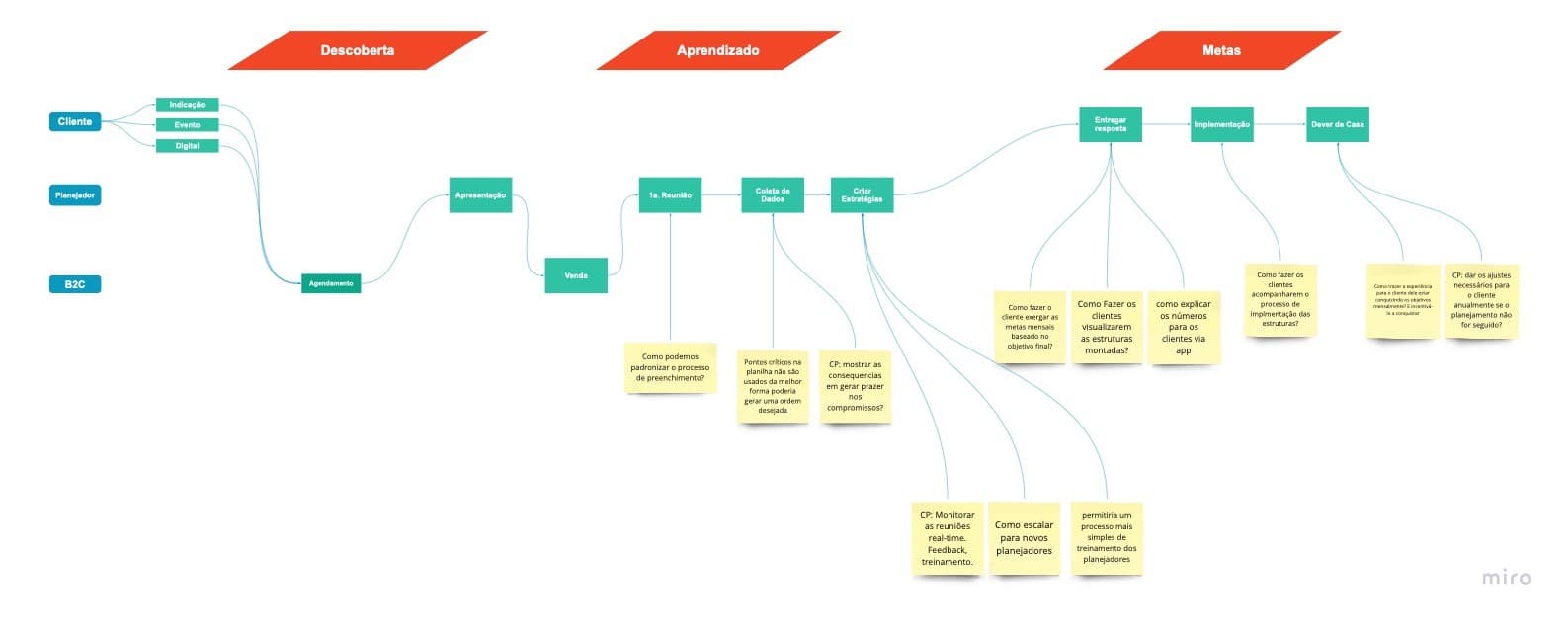
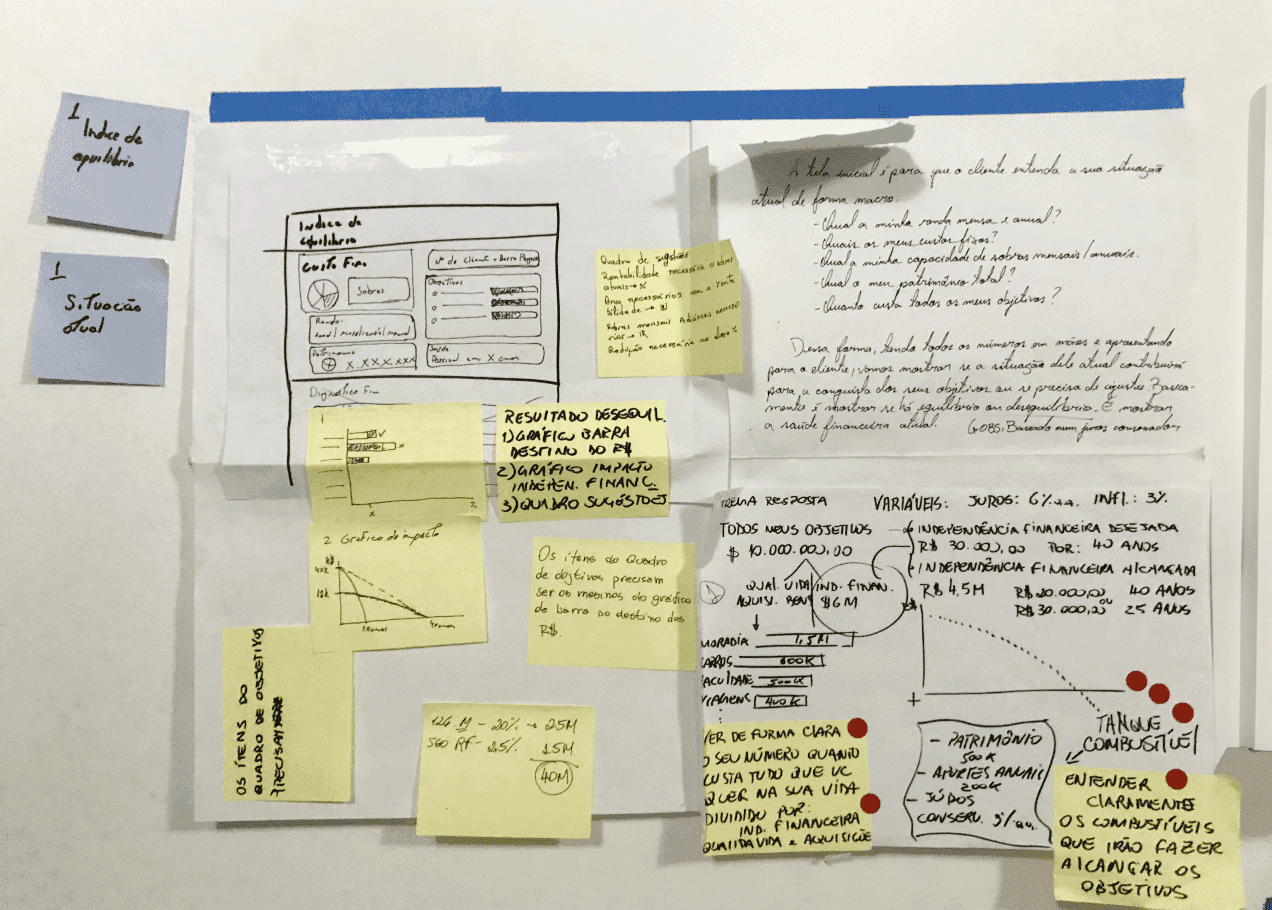
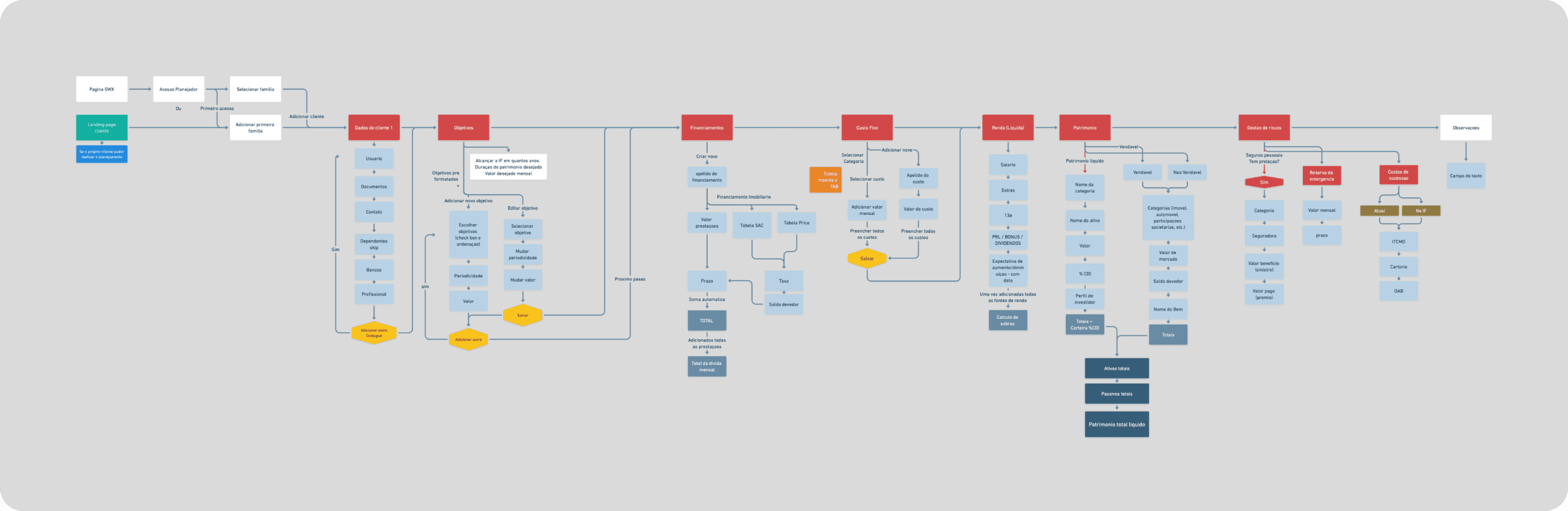
Rapid iteration became my mantra. I collaborated closely with the founder, showcasing low-fidelity prototypes of the dashboards to gather immediate feedback and refine the vision. Simultaneously, I crafted a mind map visualizing the specialist-client interaction and the data collection process, ensuring a seamless user experience at every touchpoint.
My developer partner joined forces with me at this stage, as we translated the vision into high-fidelity prototypes designed for smooth implementation. I took the reins on development oversight, ensuring every pixel aligned with the user needs and business goals.
This agile approach, fueled by collaboration and rapid iteration, allowed us to navigate the project efficiently and effectively. It also fostered a strong partnership with the WalkrApp team, laying the foundation for a successful launch.
Design Sprint
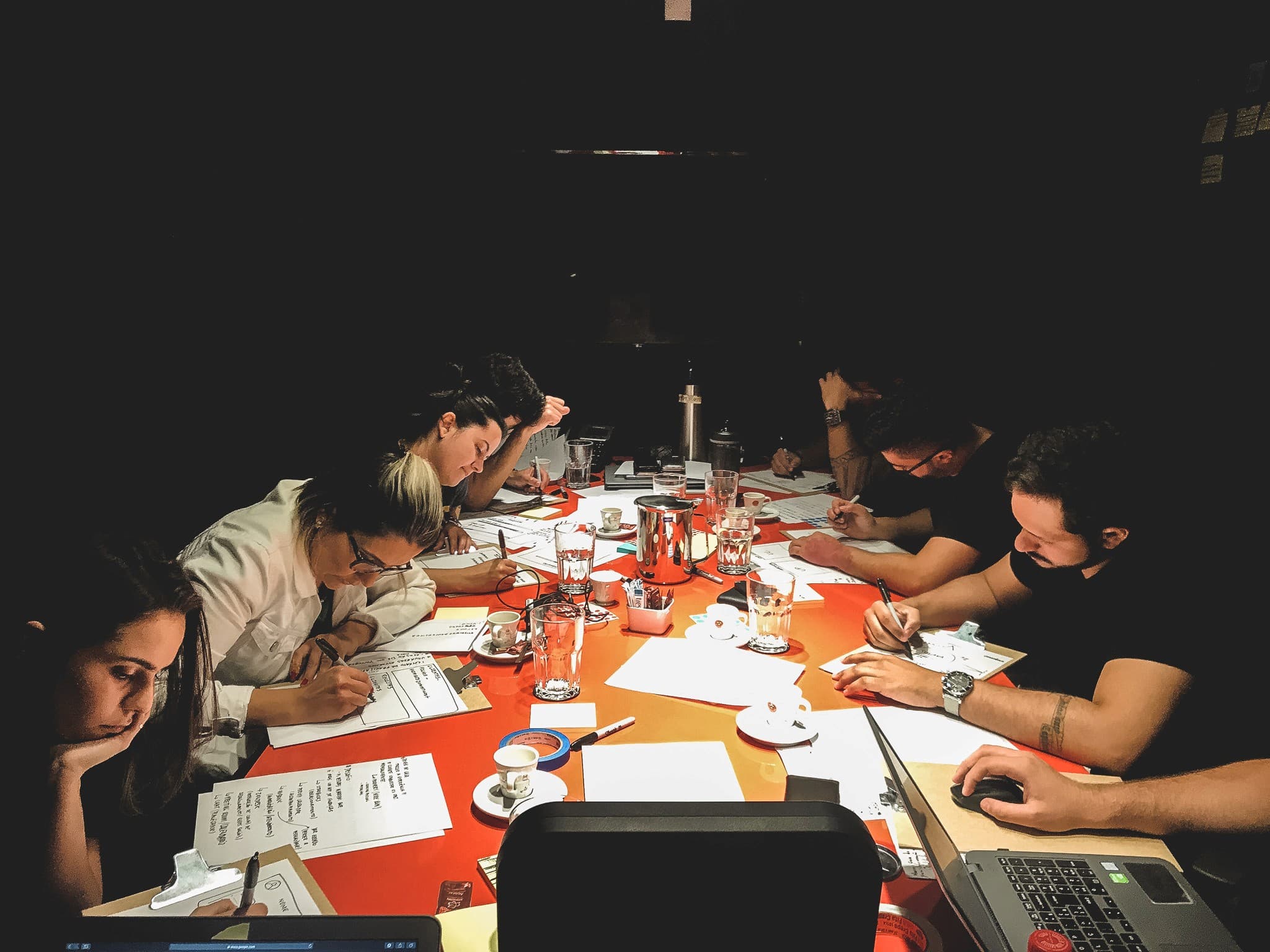
To uncover Walkr's landscape, we embarked on a three-day design sprint – a whirlwind of collaboration. I started by recruiting a diverse team, one dynamic blend of WalkrApp's visionary founder, experienced financial planners, and customer-centric marketing and service specialists, united in a shared mission. Fueled by caffeine and purpose, we delved into the heart of the matter.
Day 1: Cracking the Code
- Heist Heist Hooray! I kicked off with an overview of a Money Heist-themed design sprint. This playful theme not only boosted team spirit but also served as a fitting analogy for our mission: reinventing Walkr’s experience.
- Mapping the Maze: After breaking the ice, we embarked on a collaborative journey mapping the company's operations, charting every turn of the financial planning process.
- Lightning Talks from the Inside Man: The company founder and key experts took the stage, sharing their vision and the daily challenges. Our team, armed with sharpened ears and notepads, transformed these insights into actionable questions – our "How might we's?".
- Sticking it to the Man with Affordability: We huddled around an "Affinity Map", clustering our questions into strategic themes. Three key challenges emerged:
How might we standardise the formulary completion process?
- What would allow for a more straightforward training process for financial advisors?
- How might we help customers to understand their financial plan via the app?
- Plan the Heist: As the day closed, we prepped for the next phase. Each team member were asked to picked an app ventured beyond the financial world and prepared a short presentation to showcase its potential in solving our challenges for the next day.
Day 2: The Great Sketch Heist
- Recasting the Map: We began the day by refreshing our collective memory with a crisp recap of Day 1 and revisited the "Affinity Map", ensuring everyone was on the same page.
- Appy Inspirations: The presentations took center stage. Each team passionately explained how their chosen app could be offering innovative solutions to our challenges. Fabulous, a habit-building app, caught everyone's attention, sparking possibilities for fostering healthy financial habits.
- Silent Votes, Loud Ideas: To prioritize the most promising inspirations, we employed a democratic voting system. Each team member cast a silent vote for the apps and solutions that resonated most strongly.
- Crazy 8s to Riches: Armed with our voted-for inspirations, we unleashed a sketching frenzy. Using the "Crazy 8s" method, we churned out eight quick ideas each, before diving into deeper sketches to flesh them out. It was quite surprising how much they were engaged. As they haven’t had any designer or illustrator among the team I was wrongly expecting for them to be shy. Not the case though.
Day 3: From Prototype to Profits
- Show and Tell: The final day was a showcase of polished ideas. Each team member proudly presented their solutions, sparking lively discussions and constructive feedback. The air crackled with collaboration and collective ownership as we refined and evolved our concepts.
- Democratising the Future: Using a voting system, we identified the most promising solutions, laying the foundation for our future platform. We walked away not just with a clear roadmap, but with a shared vision – built by the team, for the team.
02 Data to Story: Prototyping WalkrApp's Path to Personalized Financial Empowerment
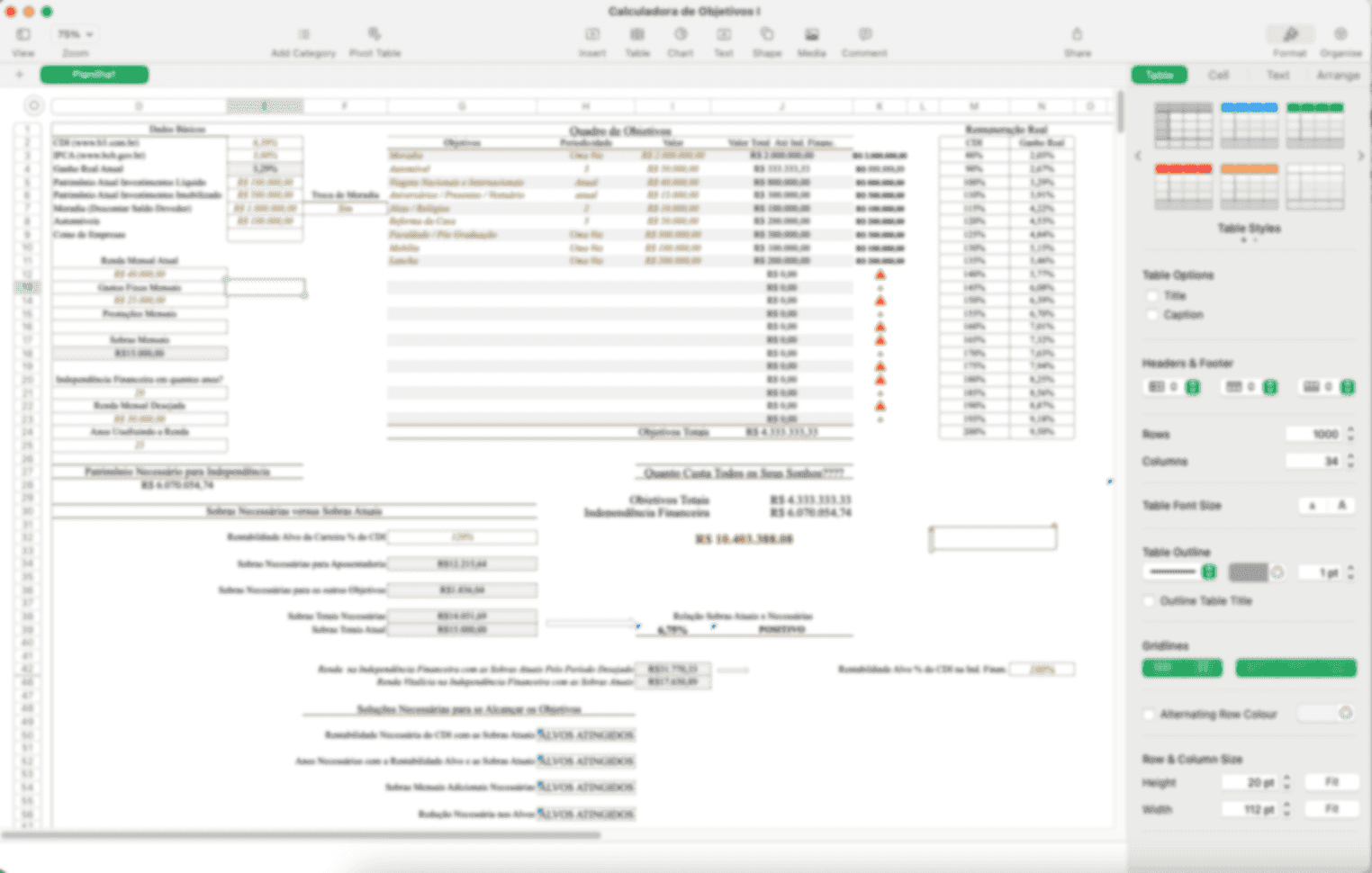
The design sprint had mapped the path, now it was time to build brick-by-brick. Armed with low-fidelity prototypes and mind-maps, I dove into crafting the core of the new WalkrApp experience. Partnering with a developer, we embarked on a deep dive into their existing spreadsheet system, a complex web of information begging to be transformed. While my focus lay in weaving data into a clear and captivating visual narrative, my partner tackled the underlying mathematical foundations.
Recognizing the founder's vision for intuitive dashboards, we co-created an initial design to demystify financial plans for clients. I firmly believed that powerful information visualization was the key, and these low-fidelity prototypes served as a launchpad for rapid iteration with the founder. Feedback flowed freely, allowing me to refine the design with agility.
However, the human guides on this financial journey – the financial advisors, also needed support. Hence, I worked towards a parallel quest, meticulously crafting a mind-map to streamline data collection. This wasn't just about efficiency; it was about liberating advisors from the shackles of tedious tasks, allowing them to focus on what truly mattered - personalized guidance and building genuine relationships with their clients.
Our initial prototypes hummed to life, dashboards whispering their stories of financial health. Functionally, they were flawless, but something was missing. The founder, with his keen eye for human connection, pointed out the void – the absence of that personal touch, the human narrative woven into the cold fabric of data.
As with any journey, we had to be pragmatic. The constraints of the Minimum Viable Product (MVP) loomed large. So, we made a strategic decision: prioritize practicality for now, lay the groundwork for future embellishments. These initial iterations, though devoid of the complete story, were essential first chapters.
Each prototype, each feedback loop, was a brushstroke on the canvas of WalkrApp's transformation. We were building not just an efficient platform, but a bridge of trust, one pixel and one conversation at a time.
This project was a pivotal moment in my freelance career, allowing me to apply and expand my skills in project management and client engagement. It bolstered my confidence in my abilities and provided me with deeper insights into financial planning. One of the highlights was the client's enthusiastic response to our initial digital transformation sketches, affirming the impact of our work. Ultimately, the Walkr App project was not just a professional achievement but also a personal journey of growth and learning, leaving a lasting impact on both the company and its clients.
03 From Prototypes to Pixels: Building Walkr's Brand-Conscious Interface
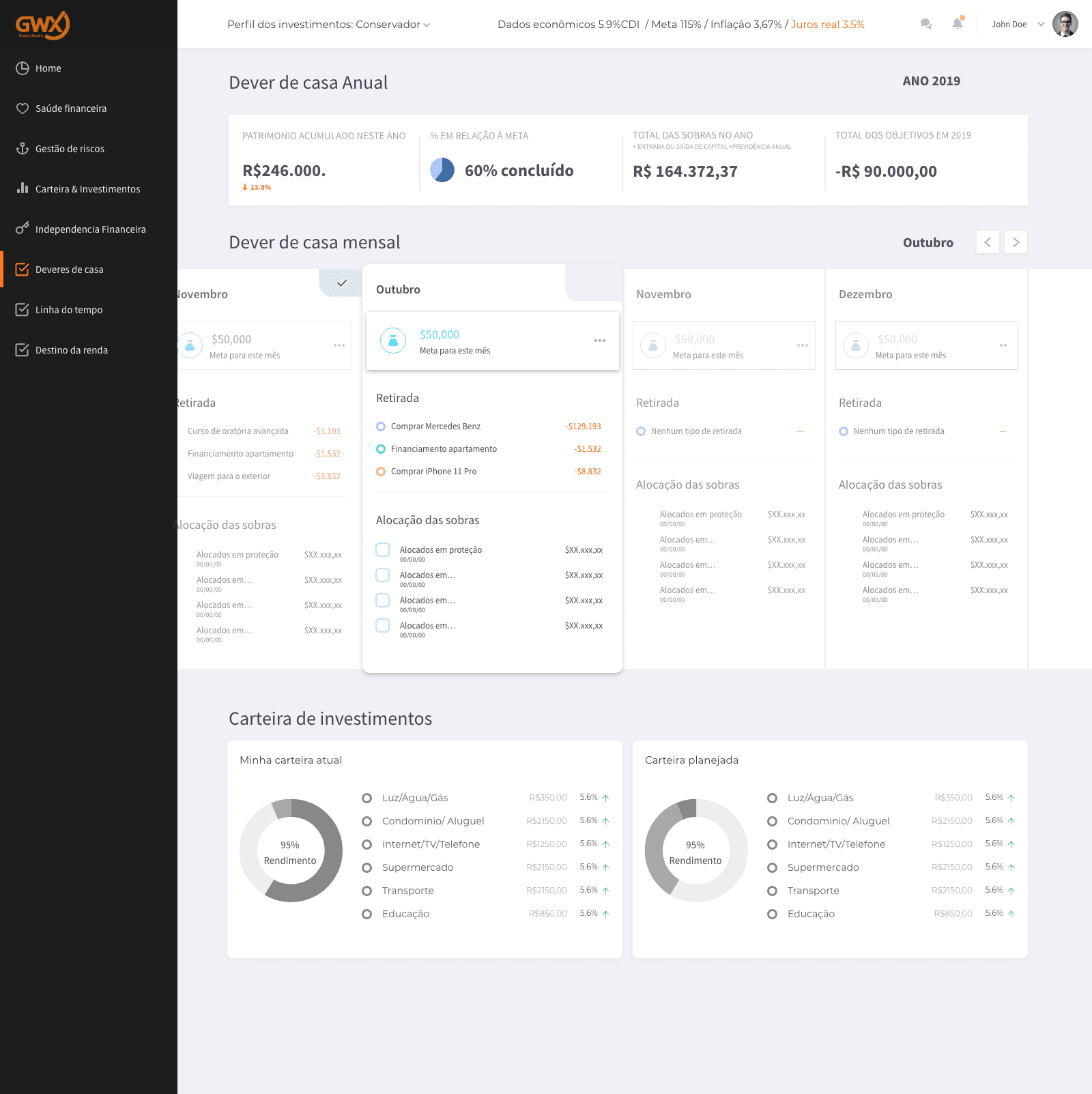
After sketching the possibilities, it was time to paint the picture. This phase brought the conceptual designs to life, transforming them into tangible, interactive dashboards that resonated with Walkr's brand identity.
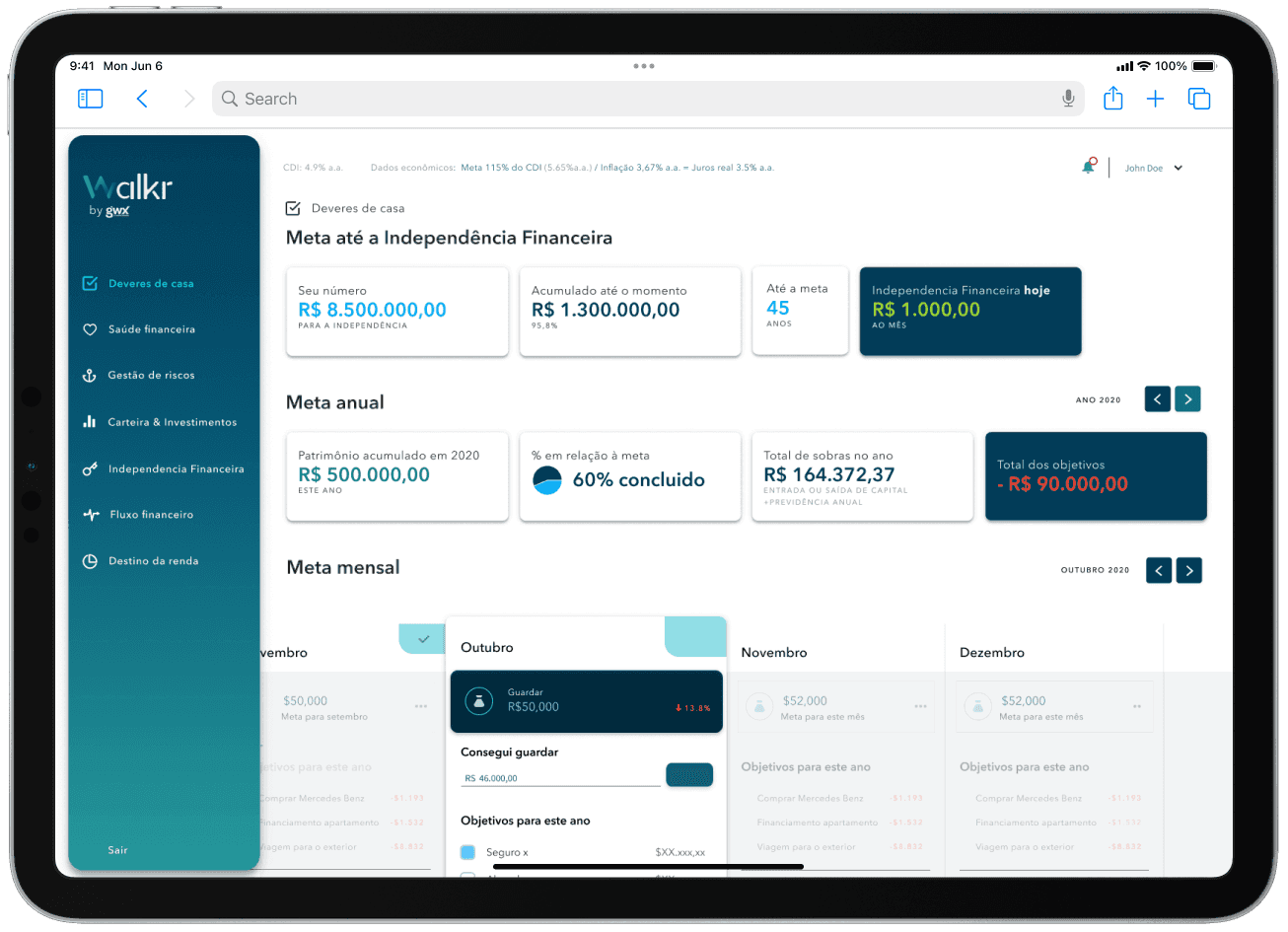
Visual Storytellers: Seven meticulously crafted dashboards replaced the sprawling seas of data in the old spreadsheets. By clustering information around key themes, these digital tapestries made financial insights clear and captivating for users.
Formulary Familiarity: Designing the formularies wasn't just about functionality; it was about respecting the flow of financial advisors. Segmenting data input mirrored the familiar process advisors used to, ensuring ease of use and seamless transition from old to new.
Rigorous Refinement: Each element undergone rigorous design reviews throughout development. This meticulous process ensured the final product stayed true to the initial vision, not only in usability but also in aesthetic appeal, upholding WalkrApp's high standards.
By prioritizing brand, intuition, and seamless transitions, we crafted dashboards that were not just visually engaging but functionally robust. This marked a significant improvement over the old spreadsheet system, paving the way for a user experience that was as informative as it was beautiful.
Learnings
learnings – This project was a pivotal moment in my freelance career, allowing me to apply and expand my skills in project management and client engagement. It bolstered my confidence in my abilities and provided me with deeper insights into financial planning. One of the highlights was the client's enthusiastic response to our initial digital transformation sketches, affirming the impact of our work. Ultimately, the Walkr project was not just a professional achievement but also a personal journey of growth and learning, leaving a lasting impact on both the company and its clients.
Next project
Vinci
View case study