Walkr — Turning financial-planning spreadsheets into a product specialists could explain
How I turned a spreadsheet-bound advisory service into a shipped web MVP that made complex plans easier to build, explain, and learn.
Category:
Shipped Web MVP
Year:
2019–2020
Role:
Solo Product Designer
Platform:
Web · Internal specialist tool

THE OUTCOME
One financial model. Two ways to make it useful.
Walkr’s specialists could build comprehensive financial plans. The problem was that the service lived in interconnected spreadsheets: powerful for calculation, but difficult to explain to clients and difficult for new specialists to learn. As the solo Product Designer, I led the work from negotiating and scoping the engagement with Walkr’s owner through sprint facilitation, service mapping, prototyping, UI design, and developer handoff. The result was a specialist-operated web MVP with a structured intake flow and seven connected views for guiding client conversations.
40%
fewer manual specialist updates
30%
fewer confused client calls
2→1 week
specialist onboarding time
Evidence boundary · Walkr reported the outcome figures after launch. I did not run the measurement and cannot independently verify its methodology.
TIMELINE
2019–2020 · sprint to desktop launch
ROLE
Solo Product Designer and workshop facilitator
TEAM
Founder, specialists, service stakeholders, and Manoel Vieira
PRODUCT
Internal, specialist-operated web MVP
THE CORE PRODUCT DECISION
One spreadsheet was doing two different jobs.
Walkr delivered a high-touch advisory service. Specialists gathered a client’s income, expenses, assets, risks, investments, and life goals, then connected those inputs through a detailed financial model.
The spreadsheets were not the wrong tool for the calculations. The problem was asking the same artifact to serve two audiences with different needs. Specialists needed to enter and maintain precise, interconnected information. Clients needed to understand where they were, where they wanted to go, what could derail the plan, and what to do next.
Preserve one financial model, but give plan construction and plan explanation different interaction modes.

Disclaimer: NDA Content – Spreadsheet was blurred on purpose.
THREE DAYS TO MAKE THE SERVICE VISIBLE
Getting the operating model out of people’s heads.
I began with a three-day, Money Heist-themed design sprint. The playful frame helped a group of financial experts—not designers—sketch, challenge assumptions, and work quickly together. We mapped how a person discovered Walkr, shared financial information, received a plan, acted on recommendations, and returned for follow-up. In parallel, we mapped how specialists sold the service, collected data, constructed the plan, presented it, and maintained the relationship.
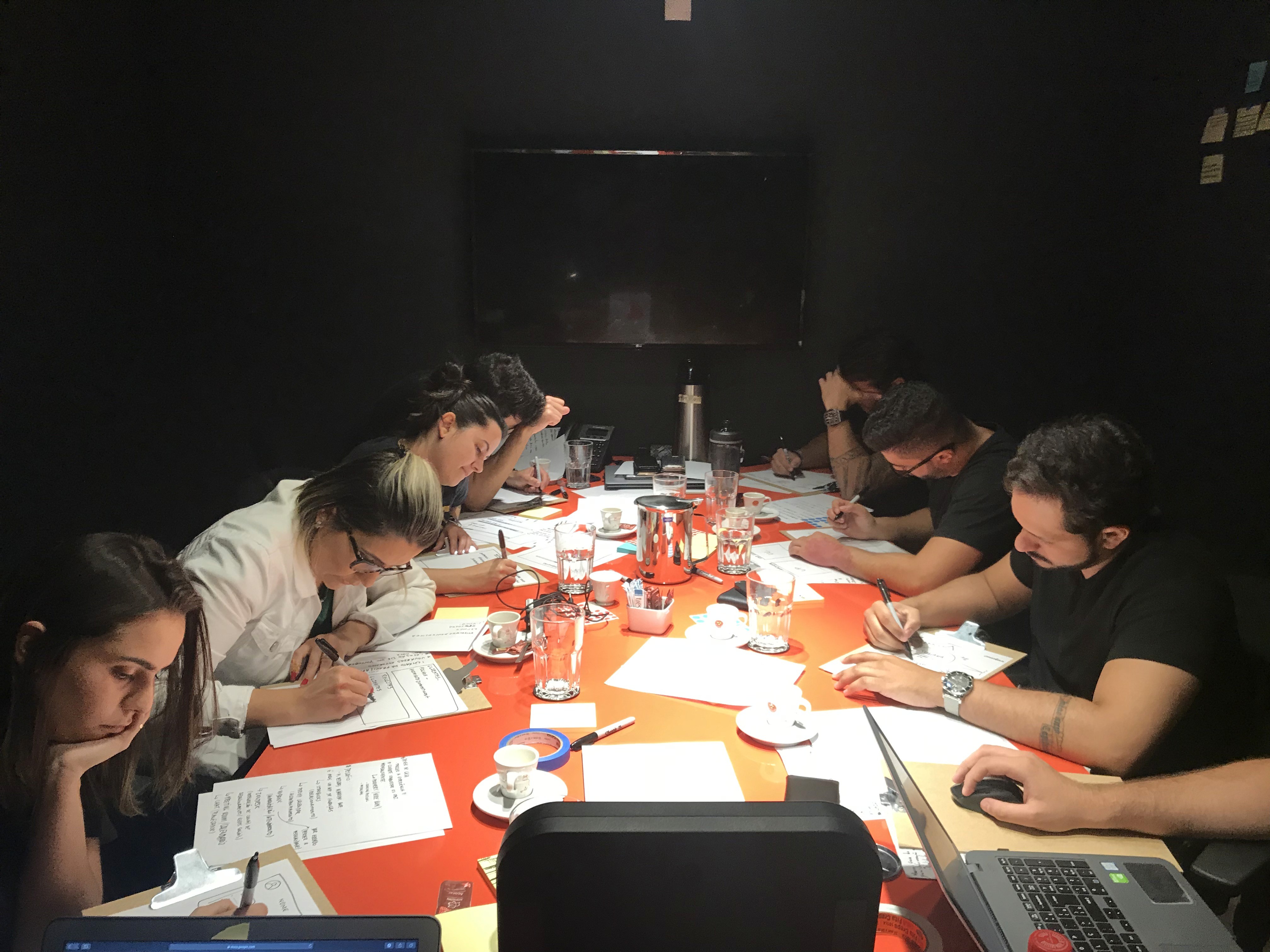

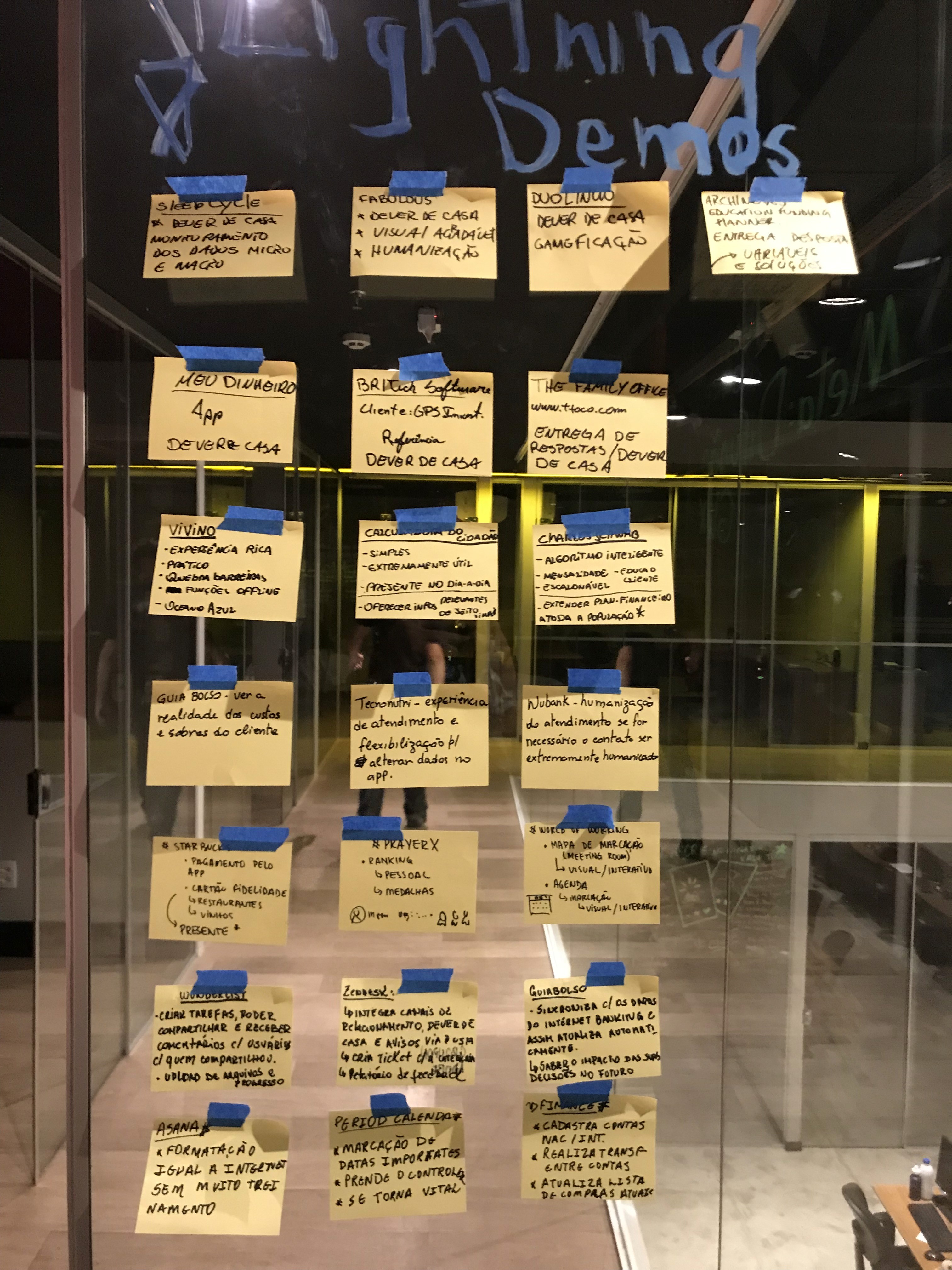
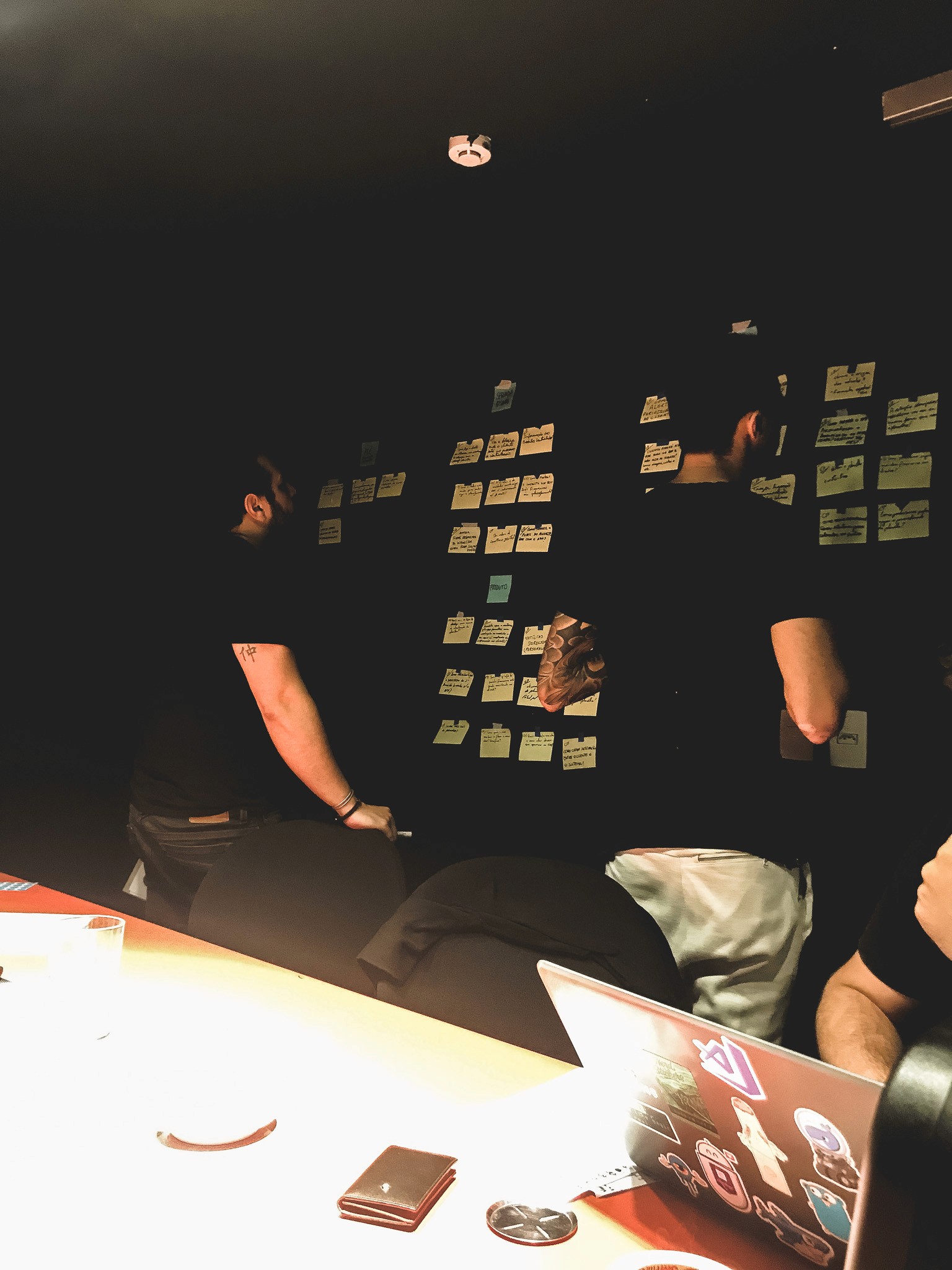

The sprint converted tacit specialist knowledge into a shared product model before high-fidelity interface work began.

Mapping both journeys exposed the handoffs between collecting information, building the plan, explaining it, and following up
Three questions became the spine of the work:
1. How might we standardize financial-information intake?
2. How might we make specialist training more straightforward?
3. How might we help clients understand their financial plan through the product?
At the end of the sprint, the founder got really emotional sharing that the company he envisioned 12 years before was taking its firs steps toward something he had wanted for so long.
THE CRITICAL REQUIREMENT
The first prototypes were functionally complete — and the founder rejected them
At the end of the sprint, the founder described the direction as an initial step toward something he had wanted to build for years.
Early low-fidelity dashboards iterated quickly with the founder. Every number the model produced had a home, the categories were accurate, and nothing was broken. Functionally, there was little to criticize.
The founder pointed at what was missing: the human narrative. Dense financial categories sat side by side with equal weight. A specialist could read the screens, but couldn't guide a conversation through them — and a client seeing them across the table would be no less lost than they were in the spreadsheet.
That rejection reframed the interface. Instead of organizing views around the model's categories, I restructured every view as a conversation arc: establish the current situation, connect it to a desired future, reveal a gap or risk, and make the next decision visible.
Warmth did not mean decorative friendliness. It meant helping the specialist explain complex consequences in an order a person could follow.


The reframe came with an MVP trade-off. We considered building the full narrative layer — milestones, progress celebration, richer storytelling — but development capacity was one person. We gave up the complete storytelling layer for v1, shipped the conversation-arc structure, and left the groundwork for later. Warmth did not mean decorative friendliness; it meant helping the specialist explain complex consequences in an order a person could follow.
DESIGNING BOTH SIDES OF THE SYSTEM
A working flow for specialists—and a story for clients.
The original spreadsheet grouped information according to its calculation model. A consultation did not happen in that order. The conversation moved through family context, goals, financing, fixed costs, income, assets, protection, and observations.
I segmented the input flow to follow that consultation rhythm. This reduced the translation specialists had to perform while speaking with a client and made the process easier to teach.
The form preserved the model’s domain logic while breaking it into stages that matched a real consultation.

THE SHIPPED PRODUCT
Seven views, each organized around a client question.
Together, the intake flow, service map, and dashboards formed one operating model. The product did not try to replace the specialist. It gave the specialist and client a clearer object to think through together.

Homework
User: What I should do next? Am I making enough progress toward my goal?

Your Life Number
Where am I today, and what future am I planning for?

Gestão de riscos
What could put my family or plan at risk?
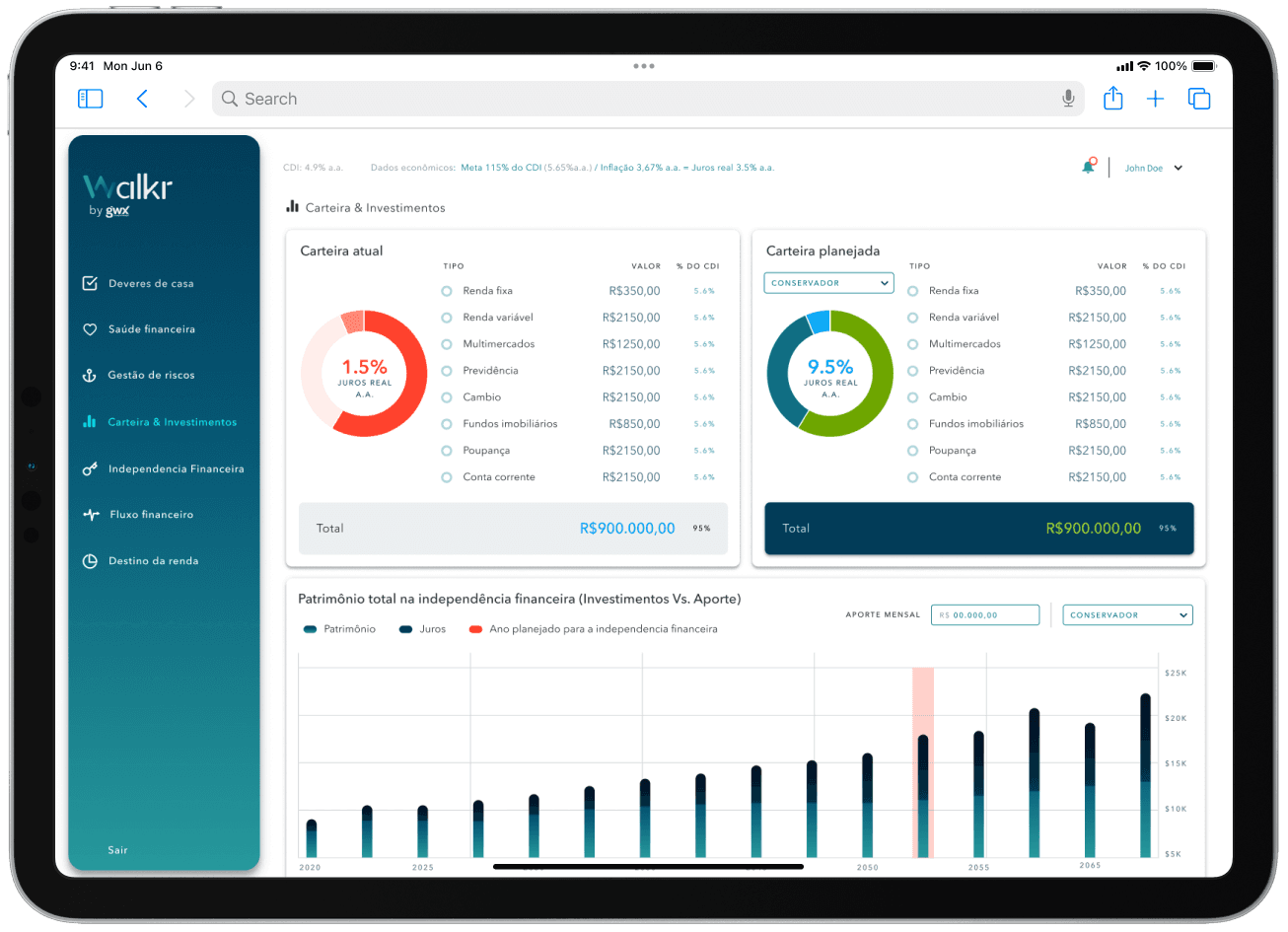
Carteira & Investimentos
How does my current portfolio compare with the planned allocation?
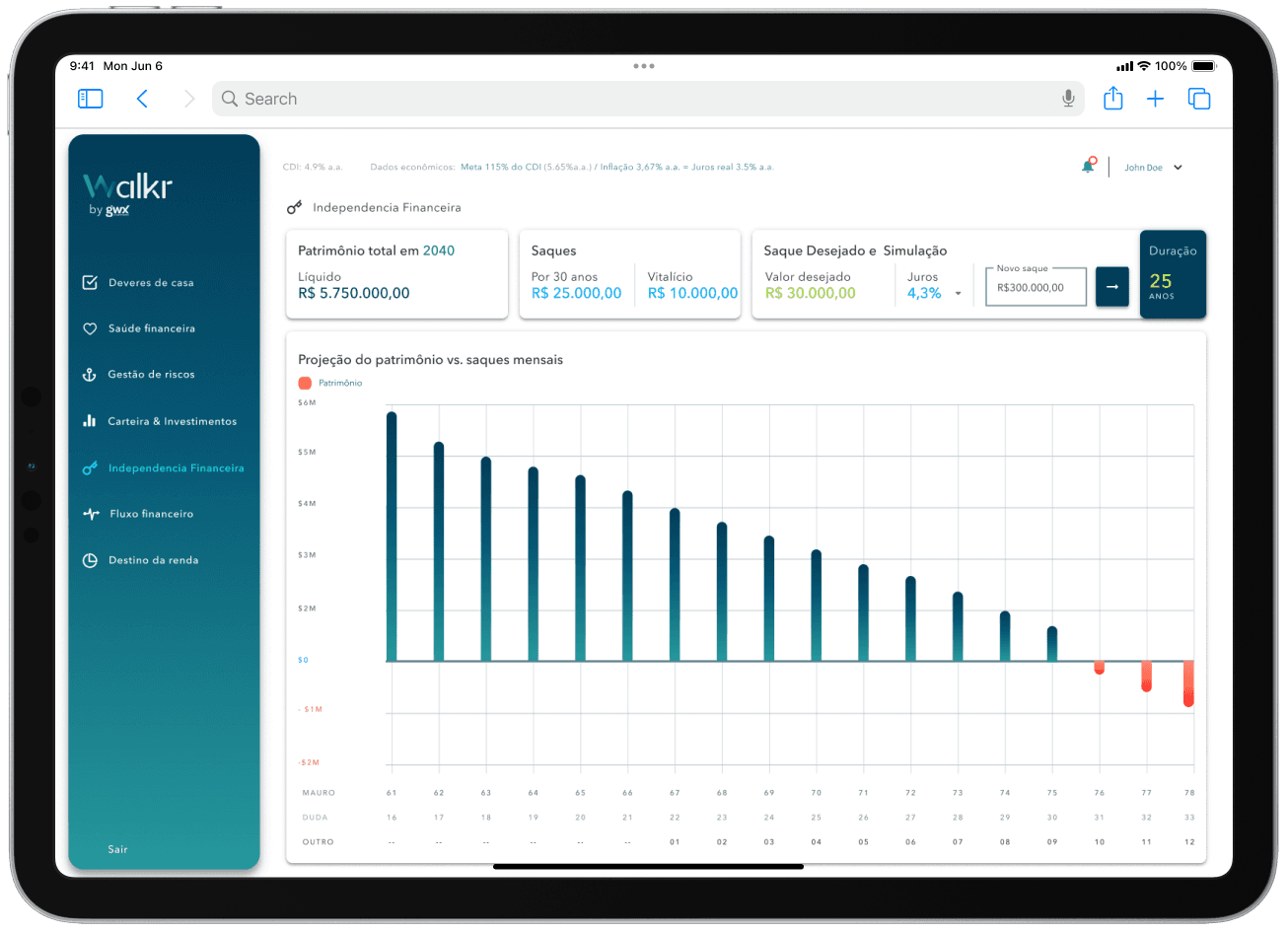
Independência Financeira
How long can my assets support the income I want?

Fluxo financeiro
How do income, costs, protection, and contributions change over time?
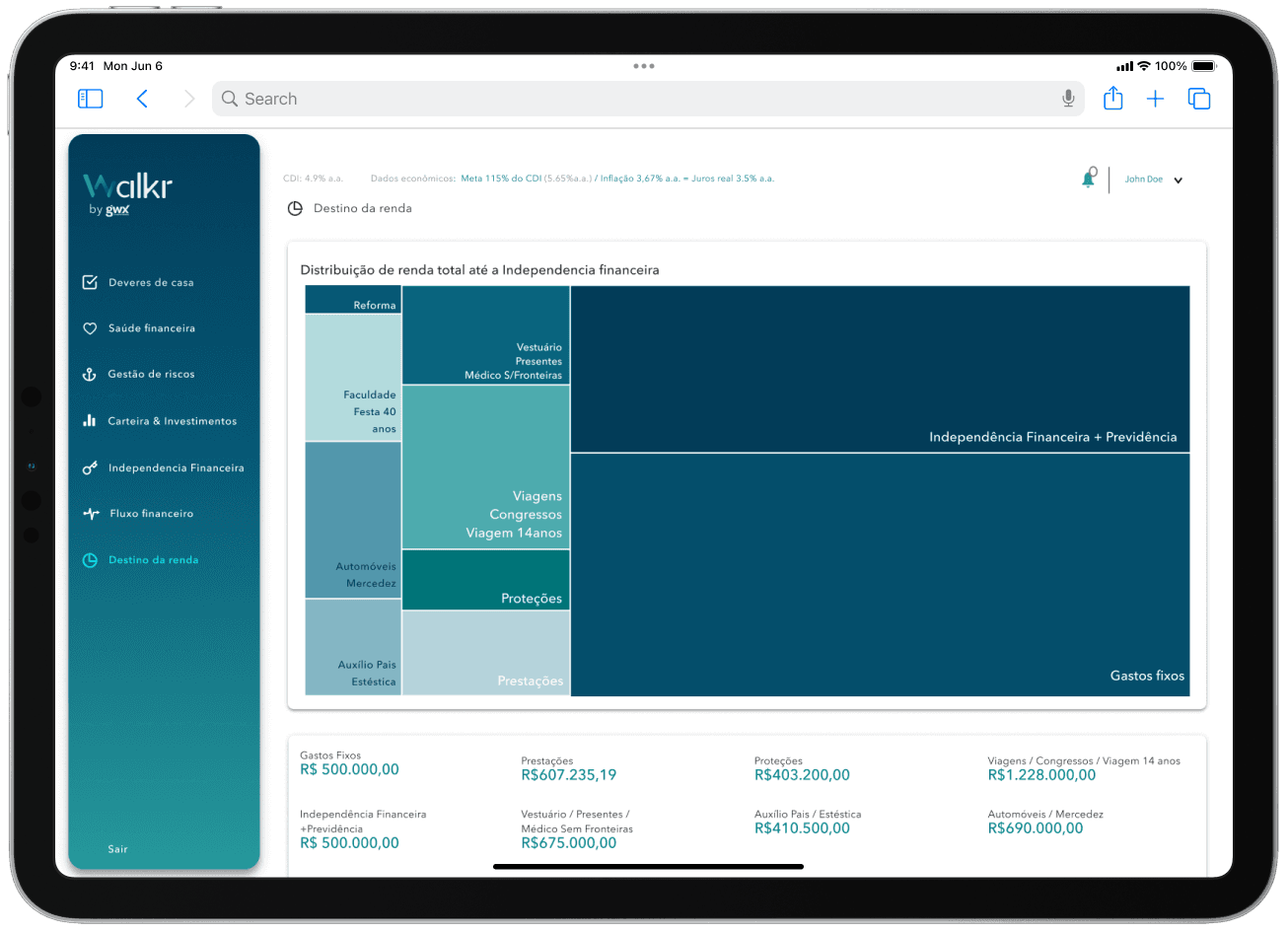
Destino da renda
Where will my total income go across needs, goals, and independence?
FROM PROTOTYPE TO LAUNCH
The web MVP shipped as an internal tool operated by Walkr’s specialists.
I worked with full-stack developer Manoel Vieira to translate the prototype into the web MVP, clarify behavior, and hand off the interface and workflow. The release focused on making specialist knowledge repeatable and client conversations easier to follow while preserving human guidance inside the service.
40%
fewer manual specialist updates
30%
fewer confused client calls
2→1 week
specialist onboarding time
These outcomes are client-reported and do not prove that design alone caused the change. They indicate that the product supported a more consistent operation and a more understandable service.
WHAT THIS PROJECT TAUGHT ME
Digitizing an expert service is not the same as transferring calculations into an interface.
The real challenge is deciding which complexity the expert needs to retain, which complexity the client needs help interpreting, and how the product can support the relationship between them.
The strongest decision was not a single screen. It was separating construction from explanation while keeping both connected to the same model. That made the financial logic usable without pretending that software could replace the judgment, reassurance, and accountability of a specialist.
This project was a pivotal moment in my career, allowing me to apply and expand my skills in project management and client engagement. It bolstered my confidence in my abilities and provided me with deeper insights into financial planning. One of the highlights was the client's enthusiastic response to our initial digital transformation sketches, affirming the impact of our work. Ultimately, the Walkr project was not just a professional achievement but also a personal journey of growth and learning, leaving a lasting impact on both the company and its clients.
Daniel Canabrava Torres
dnltrs.com
Copyright © 2025 Umeh Chinonso. All rights reserved.